

Production data
How do you put production data from an old machine to use?
An old machine is not automatically outside the data picture. Often the data is already there — it just does not reach where it is needed.
6 min read
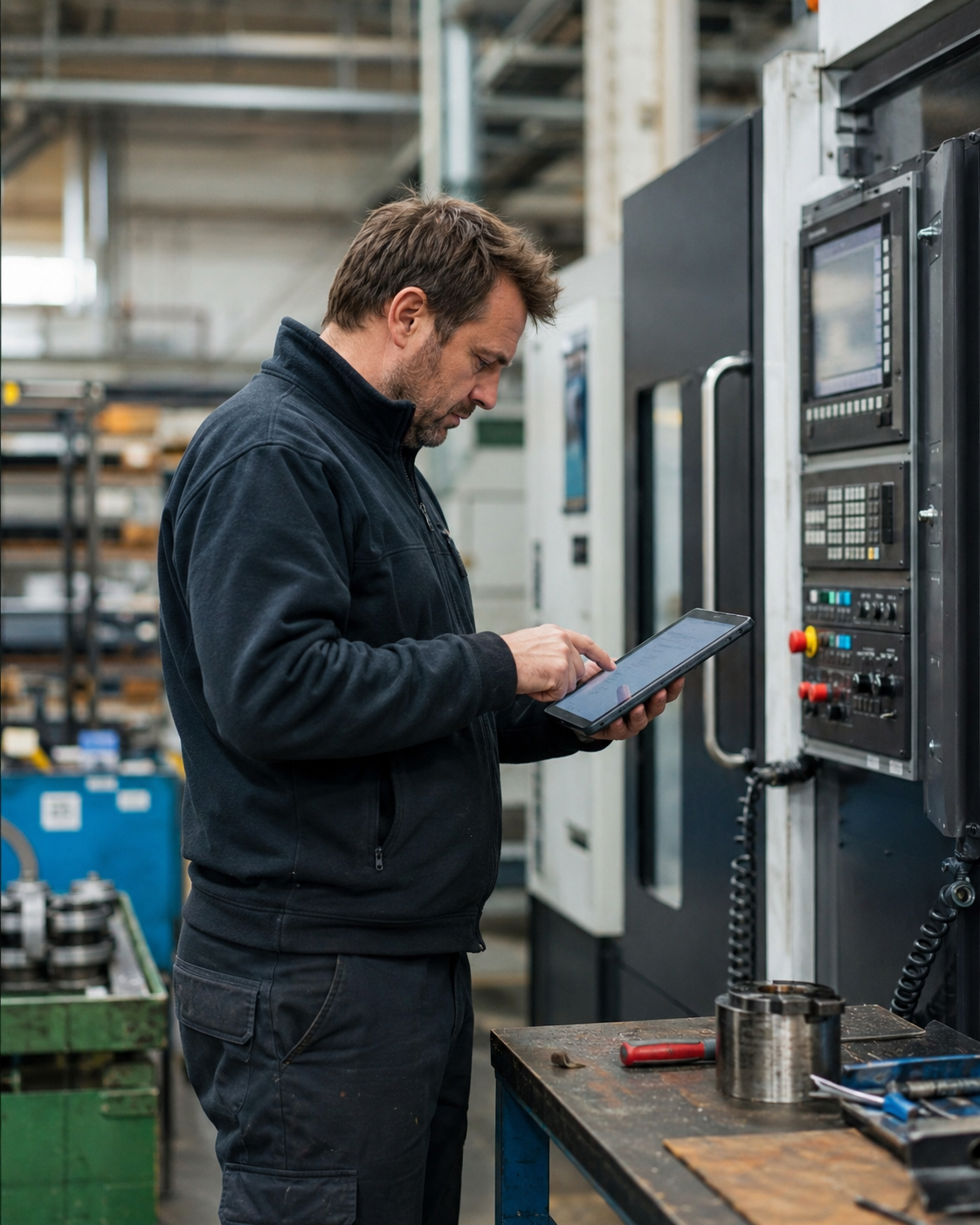
A legacy machine is not automatically outside the data picture. It often already produces run data, alarms, counters or events. They stay local: on a panel, on paper, in memory or in a spreadsheet nobody opens the next day.
Value only starts when the same information reaches where it is needed. Maintenance wants to know when the machine actually ran. Production wants to see downtime without a long investigation. Leadership wants a number it can trust, not a guess from a week ago.
The data is often already there
The first mistake is assuming the machine must be replaced before you can get data from it. The second is starting a large MES project when the need is narrower: run time, a fault, a quantity or a single event.
Start by asking three questions:
- what information the machine already produces
- who would need it in daily work
- which system it should reach
The answers scope the work. If the data is already in the PLC, drive or legacy panel, it can often be read without rebuilding the line. If it is not there, it can sometimes be added lightly: a sensor, a pulse, a status signal. In both cases the goal is the same: information is created with the work, not reconstructed from memory afterwards.
The value of an old machine is not its age. It is that it does the work — and that work can leave a trace.
Value comes from use, not collection
Collecting data does not change daily work yet. Value appears when information shows in the right place: a maintenance queue, a production view or an exception people react to in time. So start with one machine and one use case, not a plant-wide model.
Integration with what you already use is often more important than a new dashboard. If maintenance already lives in one place, run and fault data should go there. If hours and production live elsewhere, events should go there. A new screen without a connection becomes a tab that is rarely opened.
So an old machine can be part of a modern whole. It does not require replacing everything. It requires pulling information out of local memory and into the work where decisions are made.